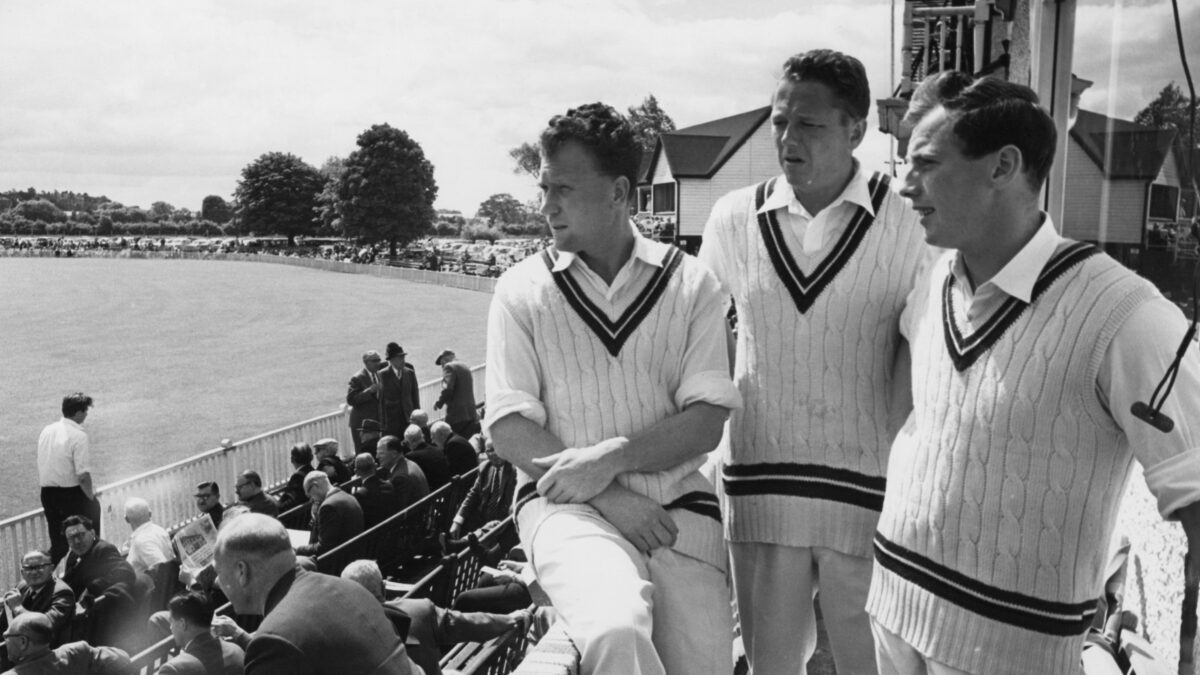
After the recent passing of Norman Gifford MBE, Worcestershire County Cricket Club today looks back at the career and life of one of the most influential figures in the Club’s proud history.
Norman’s association with Worcestershire spanned more than six decades, first as a decorated player, later as captain, before finishing his much-adorned association with the club as an Honorary Vice-President.
Gifford earned a contract at New Road after seeing an advert in a cricket magazine to trial at the club and, after arriving from his native Lancashire, would become a long-standing influential figure on and off the field, where few have served the Club with such distinction and loyalty.
An outstanding left-arm spinner, Norman represented Worcestershire for 22 seasons between 1960 and 1982, taking an extraordinary 1,615 first-class wickets.
His County Championship debut came against Kent at Tunbridge Wells in 1960, in a match that entered the record books for an extraordinary reason. To date, this is the only County Championship game to start and finish on the same day, on an utterly jaw-dropping day of cricket that birthed the start of a remarkable career.
Norman played a key role in Worcestershire’s rise to prominence during the 1960s and 1970s. He was part of the side that secured the Club’s first-ever County Championship title in 1964, and his performances that summer earned him an England call-up.
Over the course of his international career, he represented his country 17 times, including 15 Test Matches and two One Day Internationals, with his One Day career seeing him captain England in extraordinary circumstances…
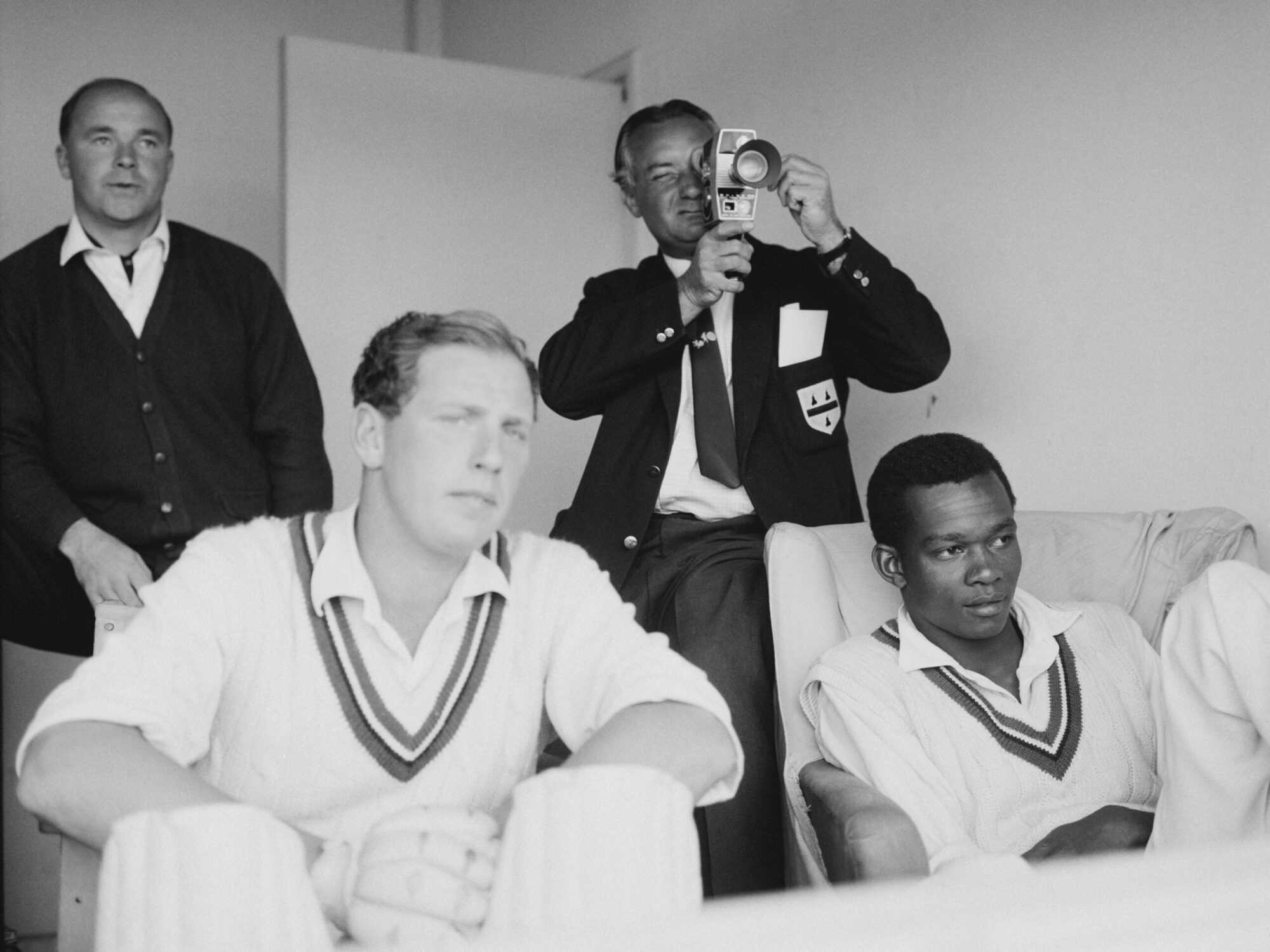
His surprise reappearance on the international stage at the age of 44, came when he was called up to be England captain for two one-day internationals against Australia and Pakistan in Sharjah. A stopgap replacement for David Gower, who was being rested, he lost both matches but was England’s most successful bowler against Pakistan, taking four for 23 off 10 overs.
In 1961, his durability and determination were on full display as he became one of four Worcestershire bowlers to claim 100 first-class wickets in a season, alongside Martin Horton, Jack Flavell and Len Coldwell. That campaign saw Norman bowl an astonishing 1,145.1 overs.
Though renowned for his bowling, he was a capable batsman too, recording a highest first-class score of 89 from number three against Oxford University in 1963, sharing a 108-run second-wicket partnership with Horton.
Norman’s influence extended into the limited-overs arena, where he made his List A debut in the inaugural Gillette Cup Final at Lord’s in 1963, producing a superb spell of 4 for 33 from 15 overs against Sussex to earn the Man of the Match award, despite Worcestershire narrowly missing out on victory.
His leadership qualities were recognised when he was named Worcestershire captain, a role in which he would achieve arguably his finest moment.
In 1974, Norman led the Club to its third County Championship title in one of the most dramatic finishes the competition has ever seen. With Worcestershire trailing Hampshire by two points going into the final round, Hampshire’s final match was abandoned due to rain. When a brief break in the weather arrived at Chelmsford (where Worcestershire were visiting Essex), Norman seized the moment, winning the toss and inviting Essex to bat.
The hosts were dismissed for just 84, with Norman claiming remarkable figures of 7 for 15, securing the four bonus points needed to clinch the Championship trophy by a staggering two points.
Recognition followed soon after, when Norman was named one of Wisden’s Five Cricketers of the Year in 1975 and was awarded an MBE in 1978 for services to cricket. He was also the inaugural recipient of the prestigious Dick Lygon Award in 1970.
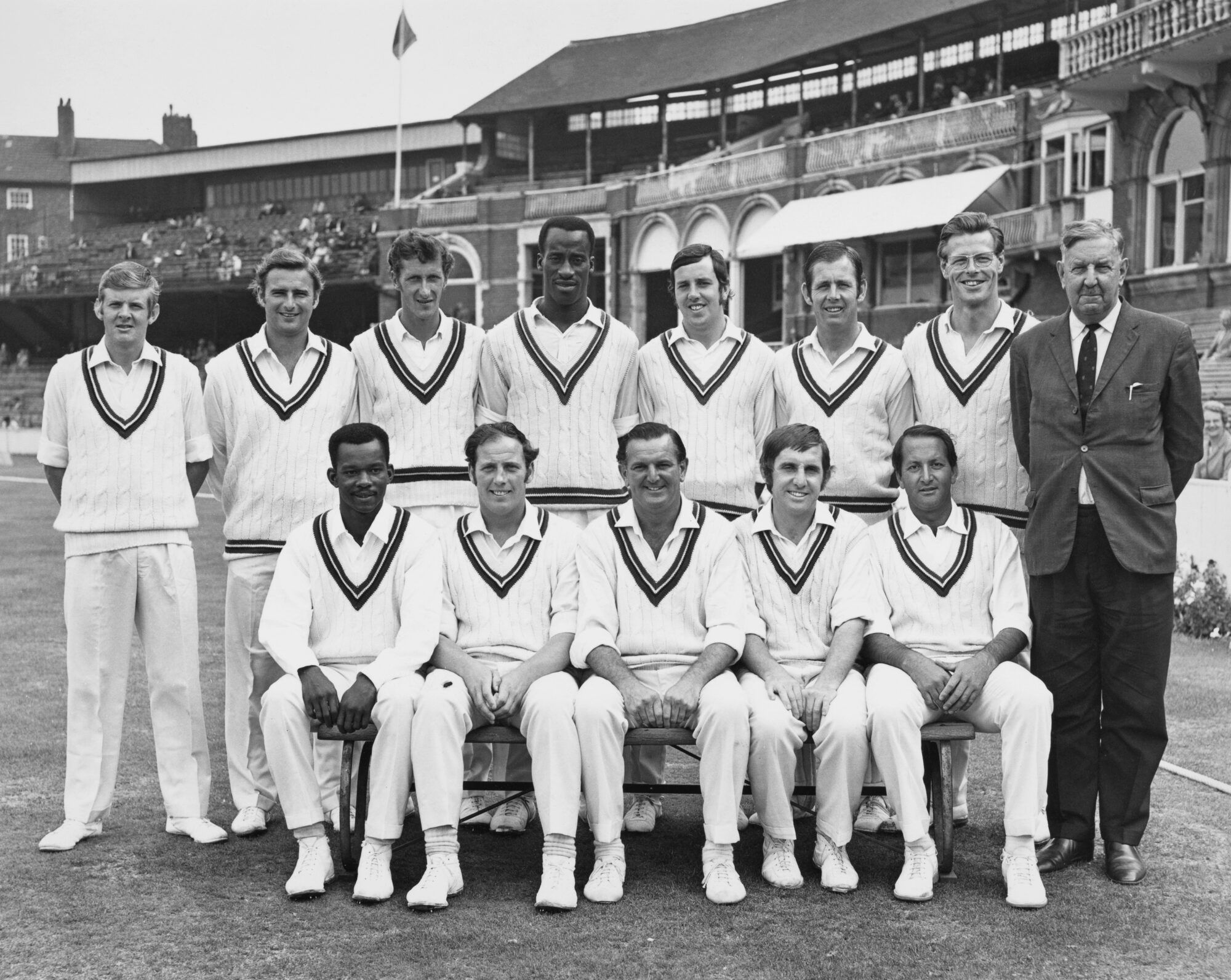
One of the most talked-about moments of his captaincy came in May 1979 during the Benson & Hedges Cup match against Somerset, a game that prompted a change in the laws of cricket and remains infamous to this day.
Gifford captained Worcestershire, when Somerset captain Brian Rose was advised by his team to declare on 1 for 0 after 1 over, (Worcestershire 2 for 0 after 1.4 overs) which meant that Somerset progressed due to their superior wicket taking rate.
The next day Lord’s threw Somerset out of the competition and the laws of the game were then changed stating that no team could declare an innings in a One-Day game.
Norman’s final match as Worcestershire captain took place in a floodlit fixture against a West Indies Invitation XI in Barbados in 1980, before his testimonial year followed in 1981, highlighted by a tour to California.
After leaving New Road, he continued his playing career with Warwickshire from 1983 to 1988, captaining the side before retiring at the age of 48.
In later years, Norman returned to Worcestershire as Club President and was subsequently appointed Honorary Vice President. His enduring legacy was further recognised in 2016, when Worcestershire and Warwickshire began competing annually for the Norman Gifford Trophy.
Only three individuals – Don Kenyon, Norman Gifford and Phil Neale – have served Worcestershire as player, captain and president. It is a distinction that underlines the depth of Norman’s contribution to the game and to the Club he loved.
Everyone at Worcestershire County Cricket Club extends their condolences to Norman’s family. He will be remembered not only as an exceptional cricketer, but as a leader, a loyal servant of the game and a true Worcestershire legend.